One Strobe, One Reflector, and a Lobby That Goes Black: A Reider 2009 Walkthrough
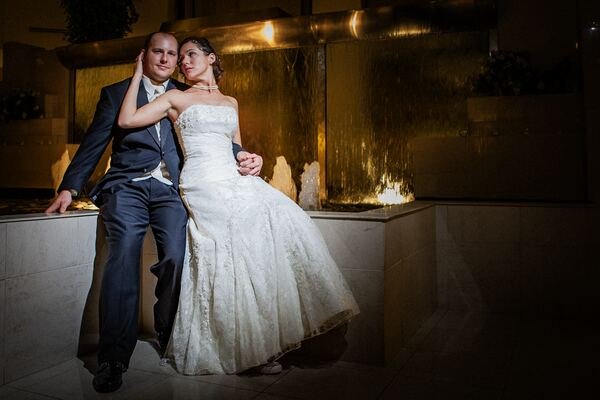
The couple sits on the lip of a hotel fountain. Behind them the lobby opens into restaurant tables and the rest of the room. The room is not dark, just busy in the way every hotel lobby is busy, and what I want from the frame is one light on the two of them and the rest of the room out of the way.
One strobe. One reflector. The reflector is doing the work most people would assign to a second strobe.
David Huynh puts the strobe on the floor at camera-right, low, head turned up toward the couple. Barn doors closed tight on both vertical sides. The doors are not protecting a wall behind the couple. There is no wall behind the couple. The doors are flagging everything past them, which means everything past them is restaurant tables I do not want in the frame, and the doors will make those tables fade to black at this exposure.
The reflector goes camera-left, broad face turned toward the couple. Light from the strobe sweeps across the scene and hits the reflector’s white surface on its way past them. The reflector returns half that light back to the couple’s shadow side. The strobe does the key. The reflector does the fill. One light source, two illuminations.
I drop the camera below their seated eye-line. Tight framing. Shooting up at them keeps the restaurant tables out of the top of the frame and lets the fountain edge ground the bottom.
The shutter opens.
The strobe lays a hard line down the camera-right side of the bride. The reflector returns soft light to the camera-left side. The restaurant tables behind them are gone. The bride and groom are two figures on a fountain in a room that has stopped existing past their shoulders.
The transferable lesson is the reflector. A second strobe would have over-engineered the frame. The reflector turns one light into a key-plus-fill, and the tables go black on their own.
Captured Concepts is a studio based in Delaware. Founded in 2005 by Keith Modzelewski and David Huynh. Contact the studio.